5 Advantages in Metal Roofing Projects
The construction industry is continually seeking innovative ways to improve building performance, safety, and efficiency. Cold-formed steel (CFS) trusses are recognized as a leading solution for metal roofing, offering distinct advantages over traditional materials like wood. CFS trusses provide a wide range of benefits that address the evolving challenges faced by builders and developers. There are five key advantages to utilizing CFS for metal roofing projects.
1. Fire resistance and durability
2. Light weight and structural efficiency
3. Supply chain and production advantages
4. Easier disassembly and sustainability
5. Design flexibility and installation
5 Key Advantages for CFS and Metal Roofing
1. Fire Resistance and Durability
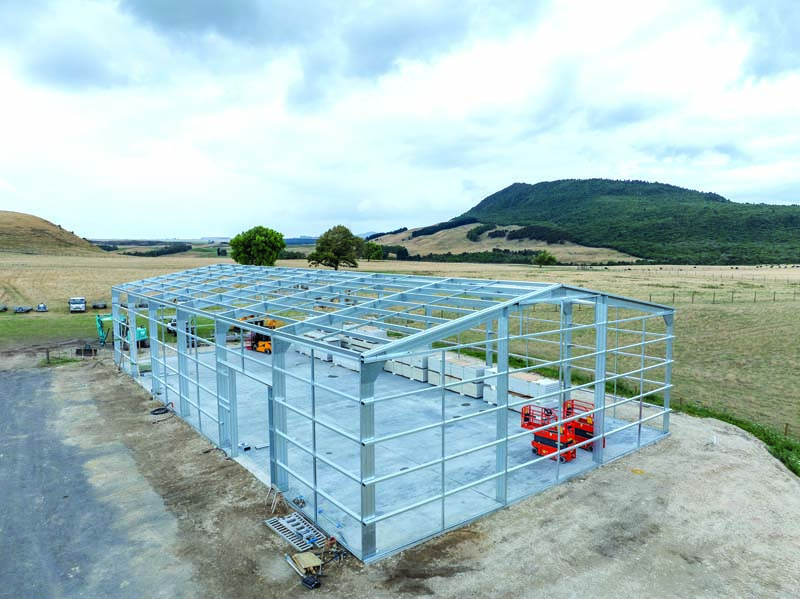
With the increased threat of damage caused by wildfires such as in the Los Angeles fires this year, the industry needs to rethink how homes should be built, and based on recent flame tests, many are calling for the use of non-combustible CFS as a leading material. While CFS trusses alone can’t stop wildfires, their integration into comprehensive fire-resistant building systems addresses the primary ignition observed in the Los Angeles fires — particularly ember penetration through vulnerable roof structures. CFS framing is non-combustible and maintains its non-combustible properties over time from building, occupation, renovation to repairs. Unlike wood, steel can’t burn. It doesn’t ignite or contribute to the spread of flames, which offers critical time for occupants to evacuate in the event of a fire. Fire-resistant coatings can be applied to steel to delay structural damage, further enhancing safety and potentially lowering insurance premiums. Properly protected CFS assemblies can maintain their integrity up to 1,700°F for up to 2 hours. And steel maintains its load-bearing capacity longer than wood during fires, delaying roof collapse and allowing more time for firefighting efforts.
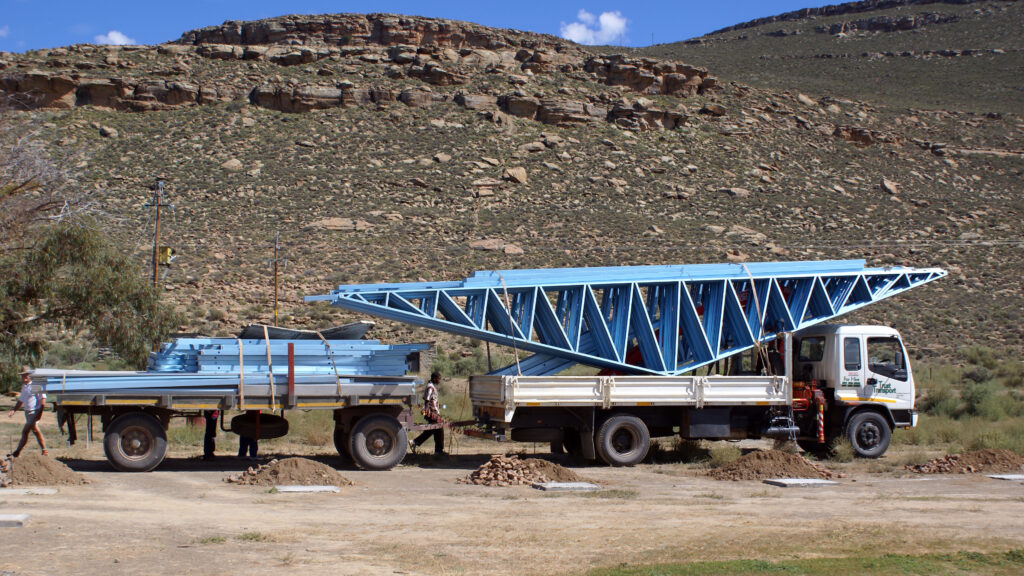
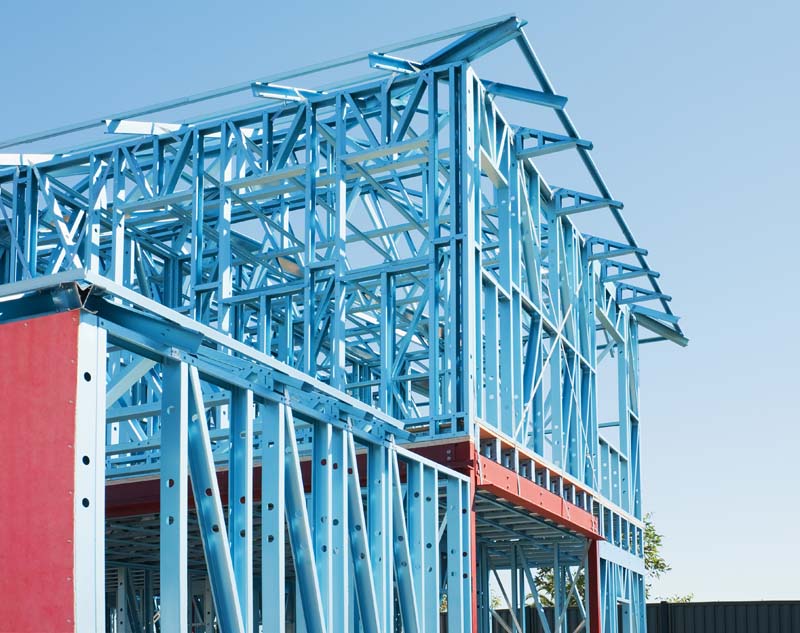
Photo courtesy of FRAMECAD
2. Light Weight and Structural Efficiency
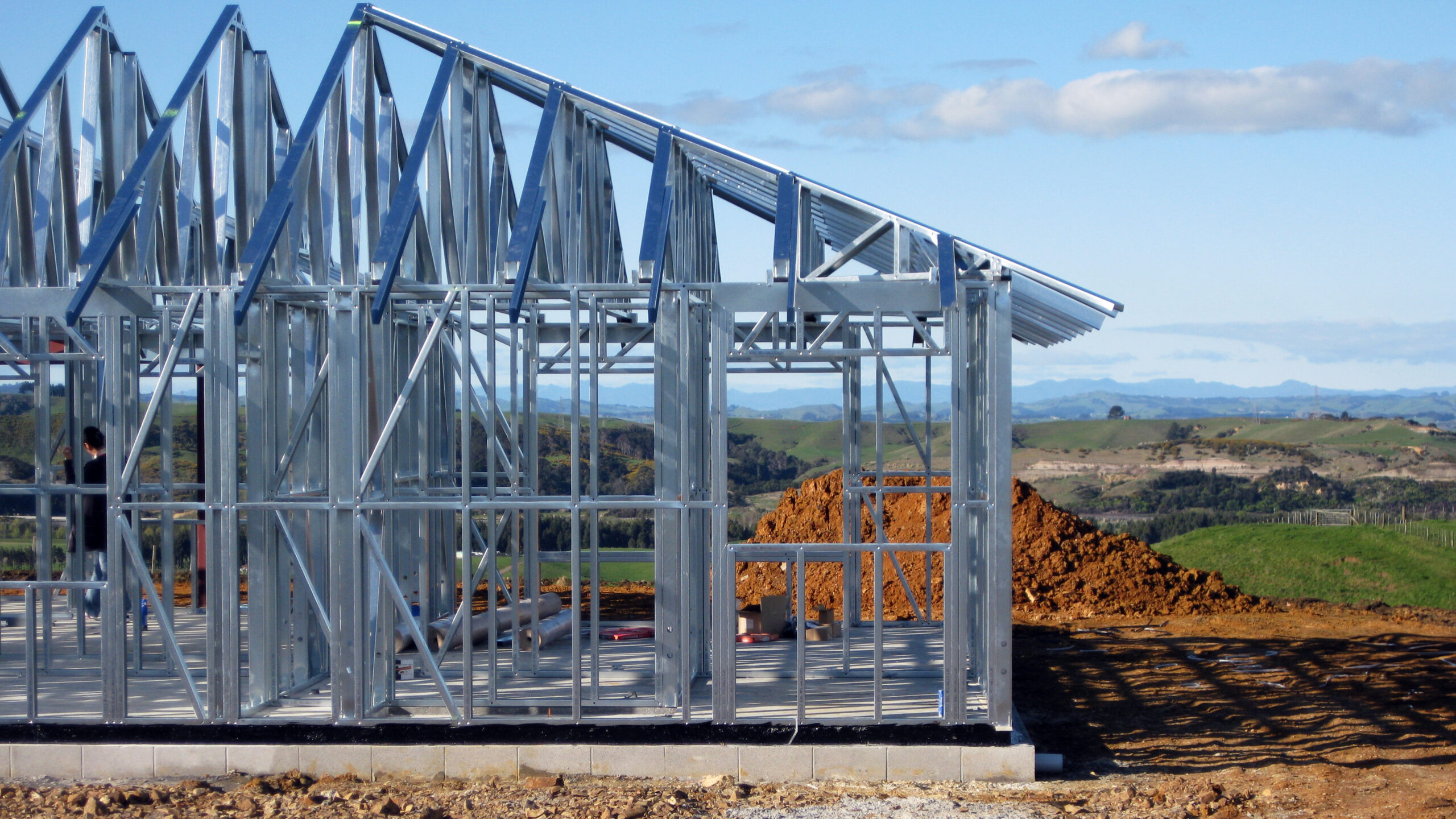
CFS roof trusses weigh approximately half as much as their wood counterparts. This reduced weight leads to several benefits such as easier handling and installation, speeding up the construction process, lower transportation costs, and less strain on the building’s foundation and supporting structures.
Of all commonly used construction materials, steel has the highest strength-to-weight ratio. Steel is inherently strong, and when formed through cold-working processes, it becomes even more resilient without significant loss of weight. This high strength allows CFS trusses to support heavy loads while maintaining minimal material weight, making them ideal for large-span applications.
For residential construction, CFS is ideal for open plan designs and flexible layouts, as it has the ability to span larger distances without additional support. In commercial spaces, CFS trusses are increasingly the go-to option for supporting metal roofing systems. CFS trusses deliver the strength and flexibility needed for expansive roof structures due to their ability to support large spans without extra support columns. This is a significant advantage in spaces like shopping centers or warehouses where maximizing usable space is crucial.
In addition to being strong, CFS trusses are structurally efficient and resistant to many of the common issues associated with traditional materials such as wood. For instance, they do not suffer from issues like warping, twisting, or rotting, which can be common with timber trusses in humid or fluctuating environments. The corrosion-resistant properties of steel, especially when treated with coatings such as galvanized finishes, help ensure that CFS trusses remain durable even in adverse conditions.
3. Supply Chain and Production Advantages
While both steel and wood supply chains can be affected by global events and market conditions, the steel supply chain has demonstrated greater stability and predictability, making it a more reliable option for construction projects. With more stable pricing, it’s easier for developers to estimate project costs more accurately than building with wood.
Steel can be contained, stored, and transported in compact coils, requiring less storage footprint than wood. The lightweight nature of CFS allows for more efficient transportation, lowering shipping costs and reducing the carbon footprint, and it doesn’t require special treatment for moisture, pests, or decay during transit, simplifying the logistics process.
Faster construction means that projects can be completed ahead of schedule, which is particularly beneficial for developers and clients who need to move into or use the building quickly.
Prefabricated CFS components are easier to install, significantly speeding up the construction process. This efficiency minimizes project delays, ensuring developments reach the market sooner. By incorporating these advantages, CFS contributes to a more streamlined, efficient, and cost-effective construction process that benefits all stakeholders involved in building projects.
4. Easier Disassembly and Sustainability
Steel, as a material, is highly recyclable, and many cold-formed steel products are made from recycled steel. This reduces the demand for virgin materials and lowers the environmental impact of steel production. CFS trusses can also be fully recycled at the end of their life cycle, further contributing to their sustainability.
Moreover, the lightweight nature of CFS trusses means that less material is required to achieve the desired structural integrity, which reduces waste during construction. Since cold-formed steel is precision-engineered, the trusses are often fabricated to exact specifications, minimizing the need for on-site alterations and waste.
When building roof trusses, CFS has the advantage in that screws are fastened rather than welded. Therefore, CFS trusses can be disassembled and reused or recycled more easily than welded steel or wood trusses. And, when a CFS-built structure requires demolition, waste is minimized since steel is 100% recyclable.
CFS enables precise and consistent fabrication, resulting in seamless integration of prefabricated components. Components are manufactured to exact specifications, ensuring consistency and quality. Precise manufacturing means fewer on-site cuts, leading to reduced material waste and disposal costs.
5. Design Flexibility and Installation
CFS trusses provide architects and engineers with exceptional design flexibility. Structural design software can create roof trusses for any architectural roof design and roof load. This means that more complex designs can be achieved. And with an automated design, manufacturing processes are quick and precise down to less than a millimeter. They are highly cost-effective, involving less billable engineering time, faster manufacturing time, and reducing rework to almost zero.
CFS can be easily tailored to suit specific project needs. It can be bent and shaped into various configurations, which means that CFS trusses can be customized to fit complex architectural designs. The material’s versatility also makes it suitable for both low-rise and high-rise buildings, and it can be adapted for a wide range of applications, from residential homes to large-scale commercial structures.
CFS trusses can be designed and manufactured in many different ways. The wide range of sizes, thicknesses, and strength of CFS offers engineers flexibility in selecting the appropriate material for the design requirements. The most popular ways to design and manufacture trusses are either with an inline truss or a back-to-back truss.
Inline Truss Considerations
• Easy to manufacture and transport
• Easy to install onsite
• Safer to use
• Doesn’t require bracing during erection and sits well on top of walls
Back-to-Back Truss Considerations
• Faster to produce than inline as fewer tooling options required
• Less material required
• Can be engineered for larger spans
• Cutting edges require more safety precautions
• Need to be braced during erection
As for installation, prefabricated components reduce the need for highly skilled labor. Considering the shortage and cost of skilled labor, CFS trusses help in this capacity. Also, with no welding required, installation is faster and simpler on-site compared to welded steel.
Conclusion
CFS trusses have emerged as a superior choice for metal roofing projects, offering a multitude of advantages that address the evolving needs of the construction industry. The five key benefits of CFS trusses contribute to safer, more efficient, and environmentally conscious building practices.
As the construction industry continues to evolve, the adoption of CFS trusses for metal roofing represents a forward-thinking approach that balances performance, safety, and sustainability. This technology not only meets current building standards but also paves the way for more resilient and efficient structures in the years to come.
Tim Lindquist is FRAMECAD’s Regional Director, Americas. He holds a Bachelor of Science degree in Construction Management and Engineering from North Dakota State University. With over 20 years of experience in the construction industry across civil, industrial, residential, and commercial sectors, he has held roles including Principal, Partner, and Operations Director at a FRAMECAD customer firm, Integrated Steel Solutions, where he managed cold-formed steel (CFS) manufacturing operations.