Originally Published as: Selling Steel: Metal Building Benefits and Sales Tips
Wood has been the paradigm in building in the United States for centuries. Many Native Americans made homes using wood. Then the Pilgrims of Plymouth found it to be a remarkably plentiful resource and built their homes of timber. Through the years, wood became the most common building material.
In the 1800s, innovators developed steel for industrial buildings. Some industrial and business buildings were built from steel; especially after Chicago’s Great Fire, the resource was considered a great alternative to wood although it was very expensive.
People building homes found the massive supply of lumber much more cost effective. For those who had money and wanted a different look for their homes, brick and stone filled the bill because the aesthetic steel brought was too alien from the usual residential fashion.
The Industrial Revolution brought processing improvements that made steel more affordable, yet it remained the staple of industrial construction. The traditional building methods and visuals were very ingrained in the culture, and wood was considered easier and faster to work with at the time.
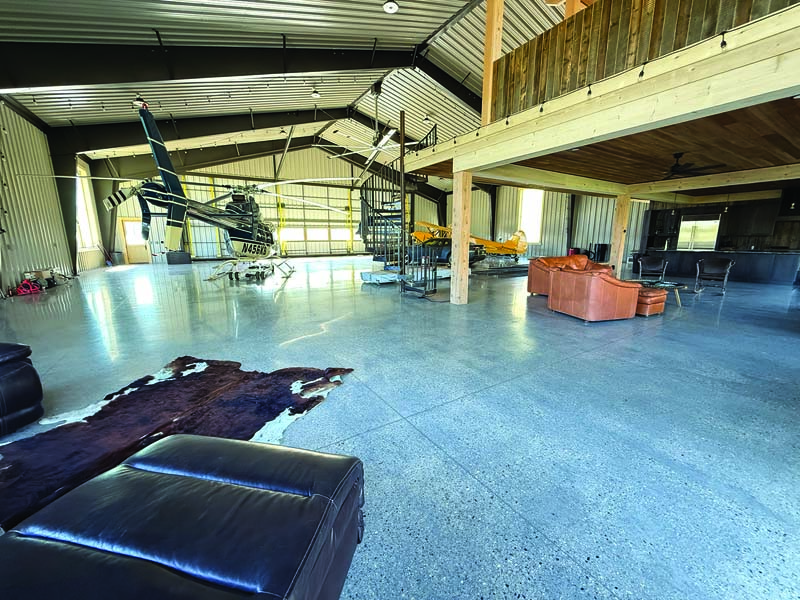
Innovation and styles do change things, though. Today builders are finding metal to be an easier material to work with and people have begun incorporating industrial design into the residential aesthetic. Further, metal buildings no longer have to have an industrial feel; there are many style options.
Builder – and Customer –Benefits
Tom Reed is the Regional Manager at Howick Ltd., and he sees many benefits to metal framing.
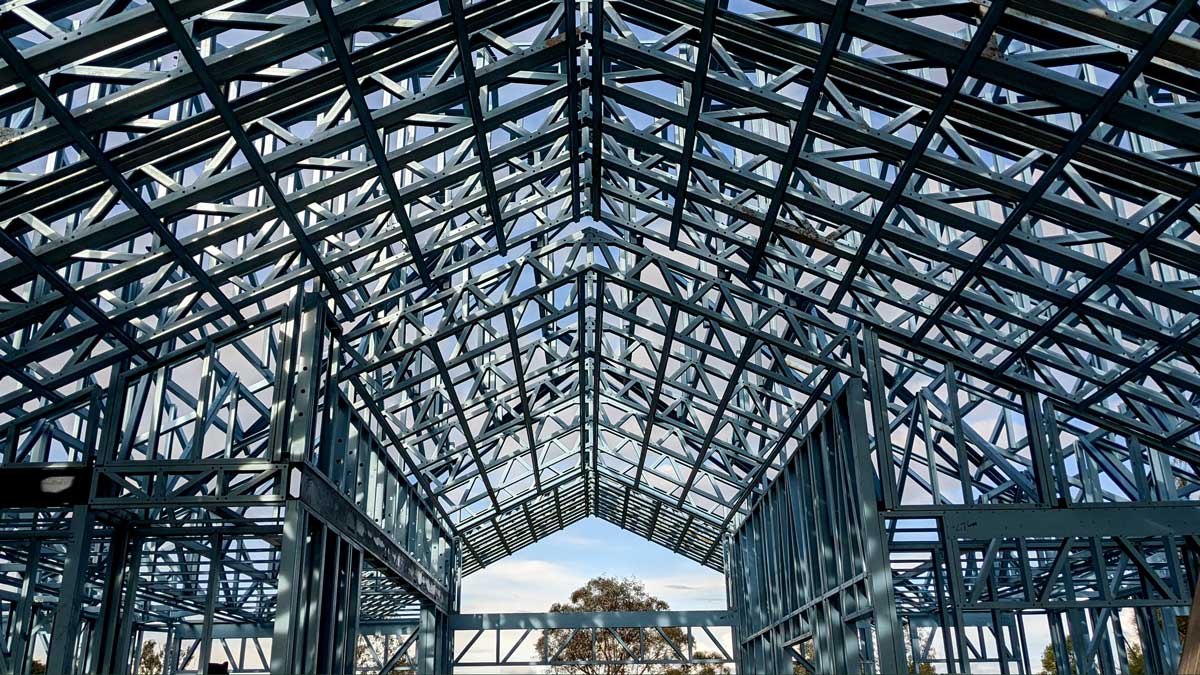
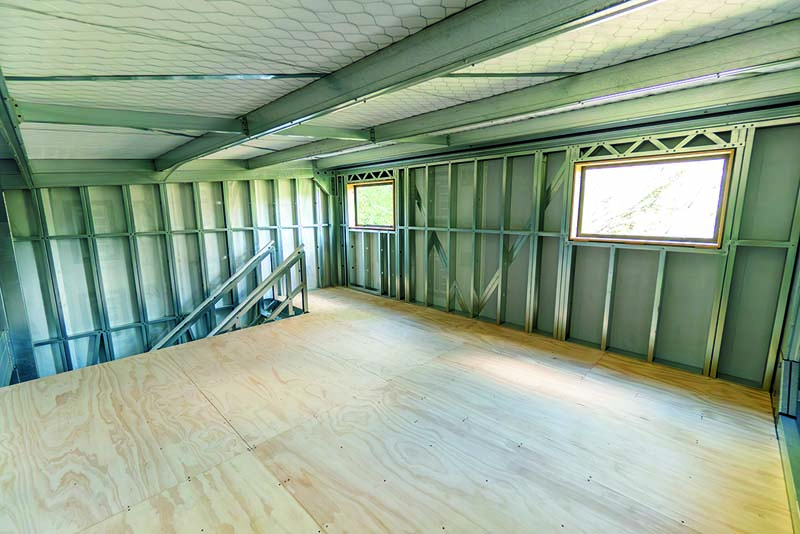
“A pre-fabricated metal frame is easier to assemble than a wood frame. The metal framing for a 2,500 square foot house can be completed in 1-2 days,” Reed said, “so metal framing can mean a quicker build benefitting the customer and creating efficiencies for the contractor, too.”
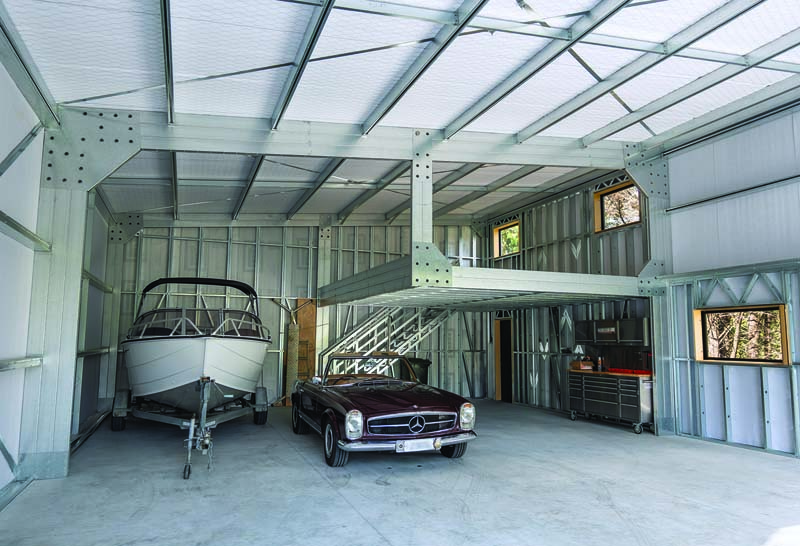
Steel frames are resilient, durable, and fire deterrent. The fire resistance of metal framing may save the customer money on their insurance. Depending on the climate in which the customer is building, fire resistance can be very important. In other climates, customers may be glad to hear that if the neighborhood is flooded, the metal frame will stand firm. The wall sheeting may need to be replaced, but the house will remain intact and mold cannot form on steel.
Another advantage that metal can claim is it is impervious to damage caused by termites and other pests. Sean Jones of Elite Build Company of Oklahoma, said that in some areas of the country, this is a huge advantage.
Other benefits? “Contractors see lower costs in warranty issues because there is no nail back-out, twisting or cracking of wood,” Reed said.
Any benefit for the customer benefits the contractor as well because it makes it easier to sell and can lead to a satisfied customer.
Typical Customer Objections
Questions about price are often the concerns that builders have because they want to be competitive. The prospective client will want to know which is more expensive, wood or steel, so that is what the contractor wants to know as well.
The lumber and steel markets can be quite volatile, so the answer to that question varies depending on when it’s asked. Reed said that while metal may start out at the higher price, that doesn’t necessarily mean that it will be the costlier choice in the end.
“If you are using panels and pre-fabricated parts,” Reed said, “a building requires less labor. Pre-engineered components can come stamped with part numbers and drawings, so they can be quickly and easily constructed.”
If less labor is required, the contractor saves money and time that can be used elsewhere. Further, parts tend to be more precise and in the end, there are likely to be fewer problems and warranty claims. Therefore, the building costs the contractor less and the savings should be reflected in the estimate they provide to the customer.
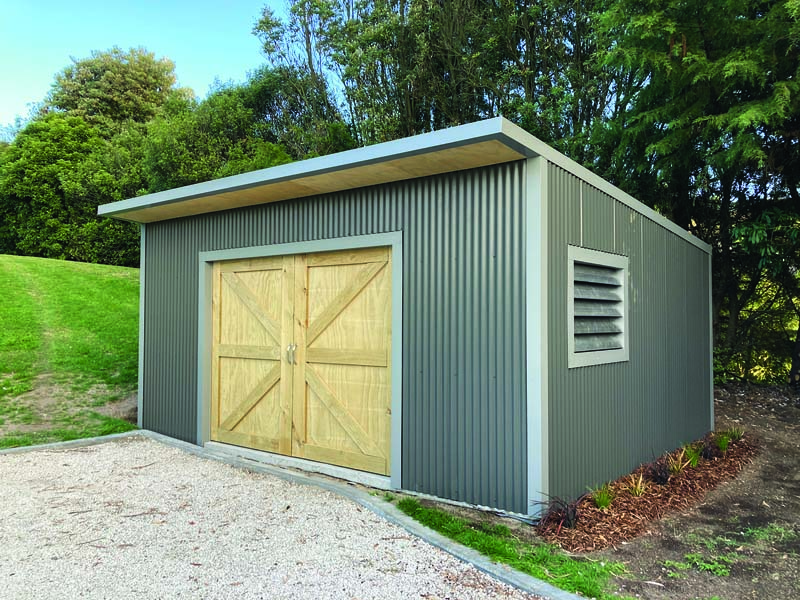
Even small buildings that might seem like they may not need metal framing can benefit. A wood shed’s framing that could take two hours can now be done in 20 minutes Reed said.
Another objection people use is that steel is less energy efficient because it conducts heat. For example, if steel framing butts up against metal cladding in a cold climate, you can see where the ice has melted on the outside of the house indicating the conduction going on. This can lead to condensation inside walls or attic spaces. However if cladding is installed properly with thermal breaks, there will be no problem.
Presentation
Sometimes making the sale comes down to the way the information is presented. The goal is to provide an education without being condescending. One way to go about this is to present information like you are giving them an insider’s tip. For example: “One thing that people often don’t know about metal buildings is that they may be eligible for a discount on their homeowner’s insurance due to the fire resistance of metal.”
Another way to approach education is to make the customer feel that you are embarking on a journey of discovery with them. You might say something like: “Well, I hear you saying that price is of great concern to you. Let’s compare metal framing and wood framing and see how it comes out.”
It may come out that the wood is the cheaper material, but then you explain the savings on labor, and you reinforce it with the possible savings on insurance.
Whatever approach you take, make sure that you are not exaggerating the benefits; lack of sincerity can be felt as well as verified by a closer look at the facts.
Jones said, “Be brutally honest and transparent. Be prepared to prove what you are saying.”
Proof can be established through references to information from reliable sources or testimonials, even taking them to talk to previous customers. If you are working on the commercial side, CEOs will compare notes, so having the approval to list one or two as references can help.