
Schweiss Doors
Schweiss Doors
Flight always enthralled Lawrence Pavlinovic. His grandfather was a merchant mariner, and his father worked for Pan American Airways (Pan Am), passing along a love of adventure.
“Flying clipper jets around the world is kind of that seafaring adventure transferred over to aviation,” Pavlinovic said.
Today, Pavlinovic is a captain with Alaska Airlines, flying 737s across the United States, Canada, and to sunny ports of call in Central America. Even in his off hours, Pavlinovic lives and breathes aviation. He owns a Republic Seabee and a Globe Swift. For the last few years, he’s called an airpark in northwest Washington State his home. In this unique residential development, homes share space with a small airport. Residents and their guests can taxi planes directly to the runway from their homes.

“It was always a dream, to live in an airpark,” Pavlinovic said. “It is a wonderful community.”
Pavlinovic and his wife fell in love with the airpark lifestyle. They eventually purchased a parcel at Frontier Airpark, but the property was missing one very important feature — a hangar. Pavlinovic started the process of rectifying that issue, walking the length and the breadth of the park, talking to residents about their hangars, gathering advice and ideas.
“I wanted the biggest possible hangar I could build and afford,” he said.
The Project Team
To design the hangar, Pavlinovic hired Thomas Bormann, Principal of Bormann International Inc. in Seattle. An architect with over 35 years of experience in both Germany and the United States, Bormann has done a variety of projects, designing all sorts of buildings, including high-end residences, multi-family homes, and commercial buildings, as well as several specialty projects like retail, equestrian, and security. Pavlinovic offered a new opportunity.
“This was my first hangar,” Bormann said. “Number one.”

Pavlinovic and Bormann worked together closely to design the hangar, using the feedback Pavlinovic gathered during his conversations with fellow aviators in the airpark.
The project team included general contractor HBHansen; Kingworks Structural Engineers; Omega Engineering; and Nelson Geotechnical Associates.
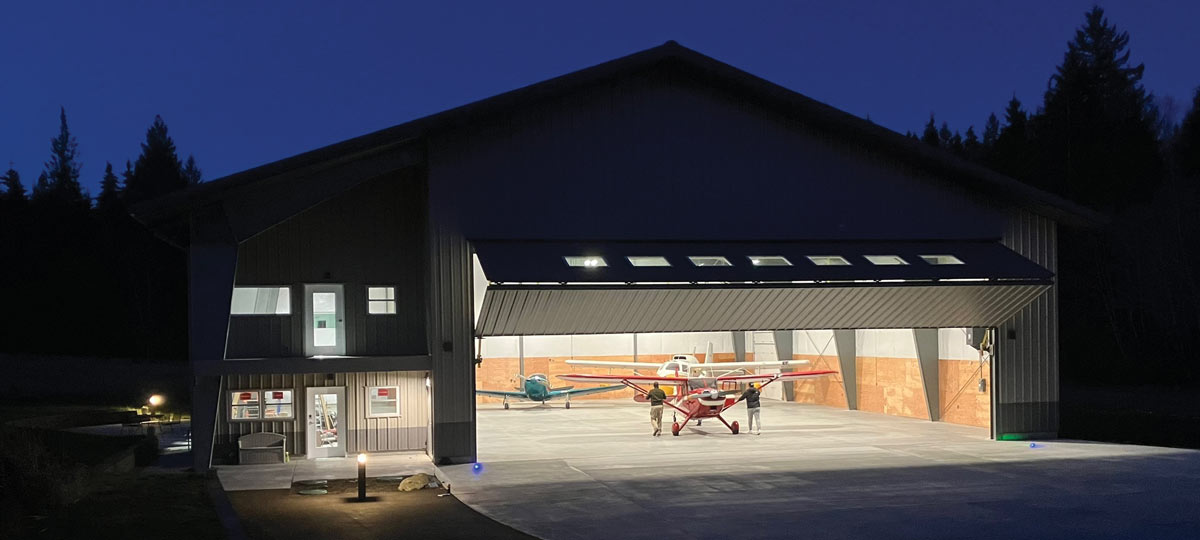
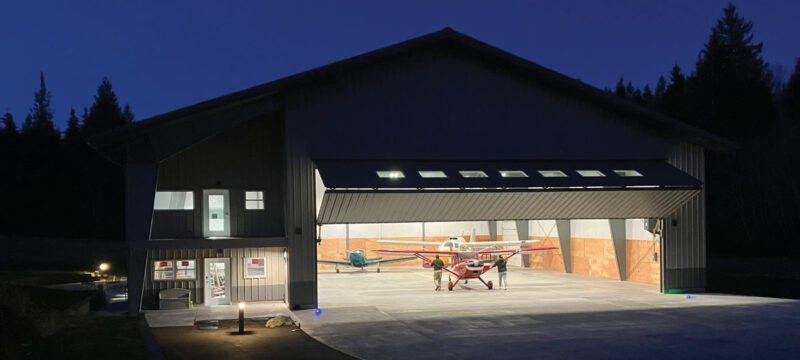
Today, Pavlinovic is a captain with Alaska Airlines, flying 737s across the United States, Canada, and to sunny ports of call in Central America. Even in his off hours, Pavlinovic lives and breathes aviation and his hangar home embodies that love.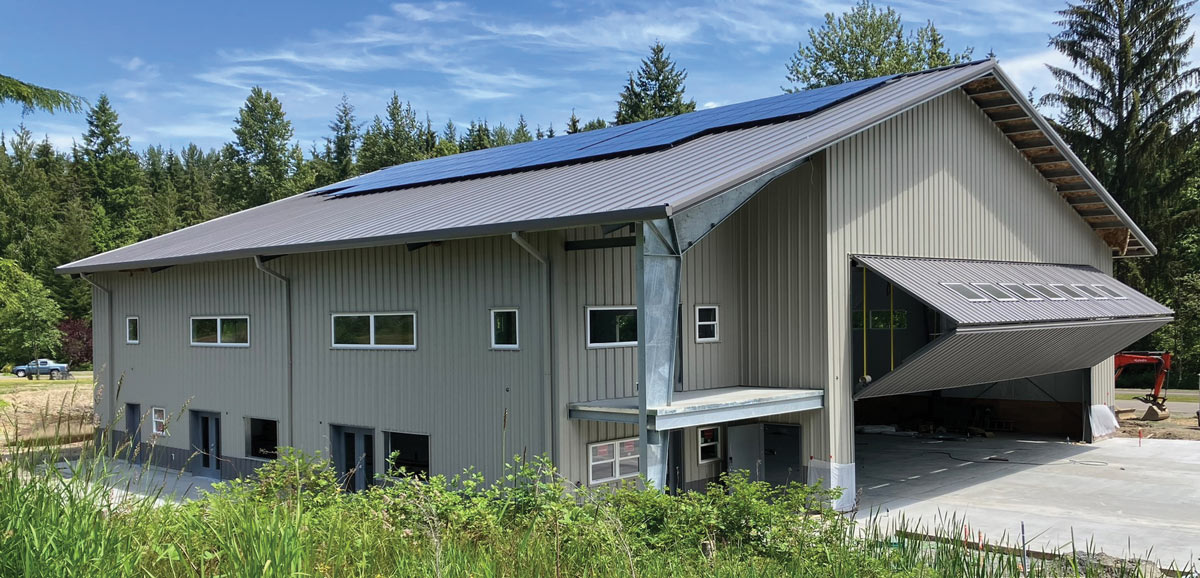
One advantage of the bifold door is the way it opens, lifting straight up and folding in half, instead of swinging in a wide arc out and up in front of the building. This allows for more space in front of the hangar where vehicles and planes can be parked safely, even if the hangar door starts to open. Photos courtesy of Schweiss Doors
Both this Globe Swift and the Republic Seabee fit in Pavlinovic’s hangar. In fact, he said it could fit five or six planes, depending on their size.
Lawrence Pavlinovic’s Republic Seabee is an amphibious plane, which means it can take off and land on both water and land. With Washington State’s abundant lakes, he can leave from his hangar home, visit a lake, and fly back to his hangar home.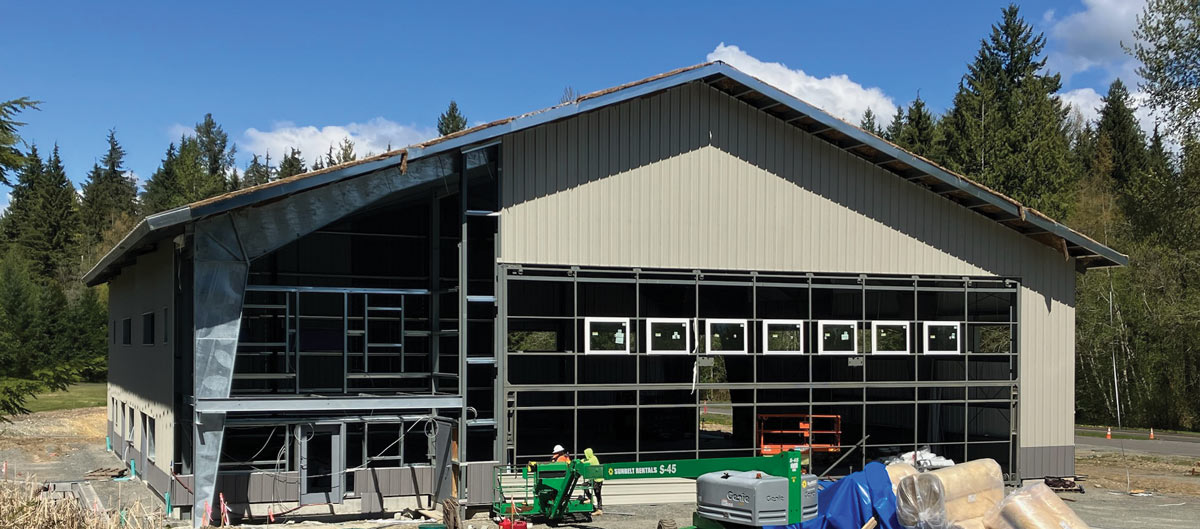
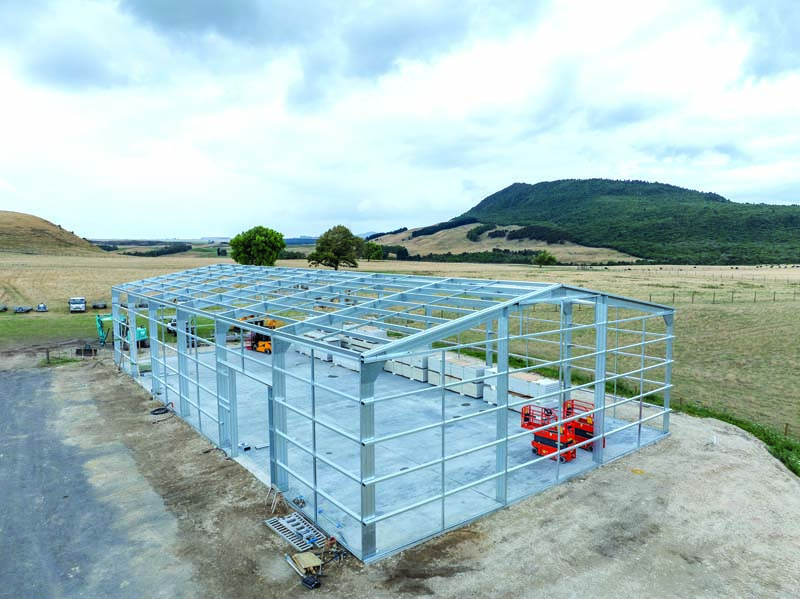
The hangar home features a red iron frame. Owner Lawrence Pavlinovic worked closely with architect Thomas Bormann, Principal of Bormann International Inc. in Seattle to create a custom design, incorporating feedback Pavlinovic gathered during his conversations with fellow aviators in the airpark.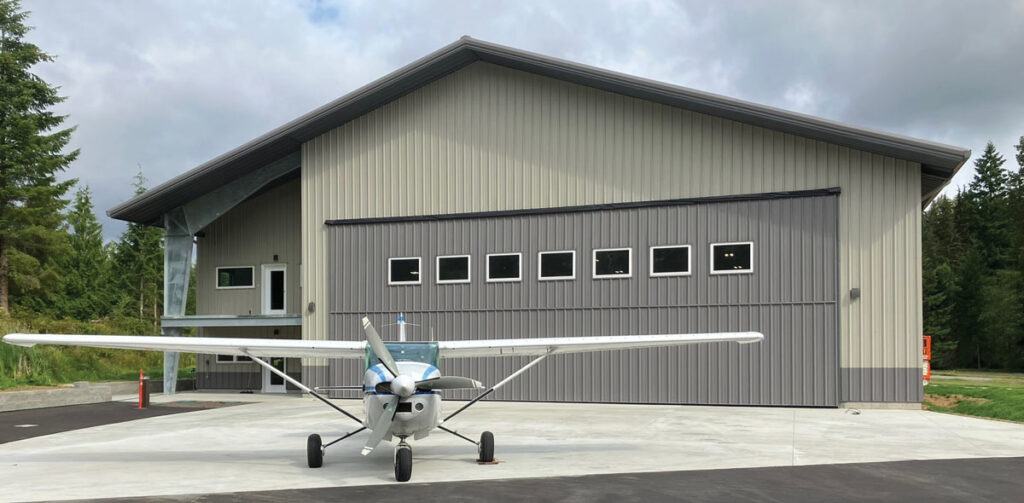
The Structure
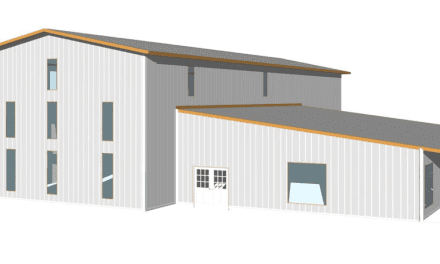
The hangar is a pre-engineered metal building (PEMB), also known as red iron, or structural steel. The sturdy structure is designed to handle the climate and weather conditions, protecting not only his family but his aircraft. Both the red iron frame and the steel siding were supplied by HCI Steel Buildings.
The insulation used to regulate the temperature in the hangar and home is the Simple Saver System by Thermal Design incorporating Johns Manville insulation. Hangar wall windows were supplied by Milgard.
The Hangar Door
Since the home also functions as a hangar, choosing a hangar door was an important decision, as the door protects the home and provides an essential structural component.
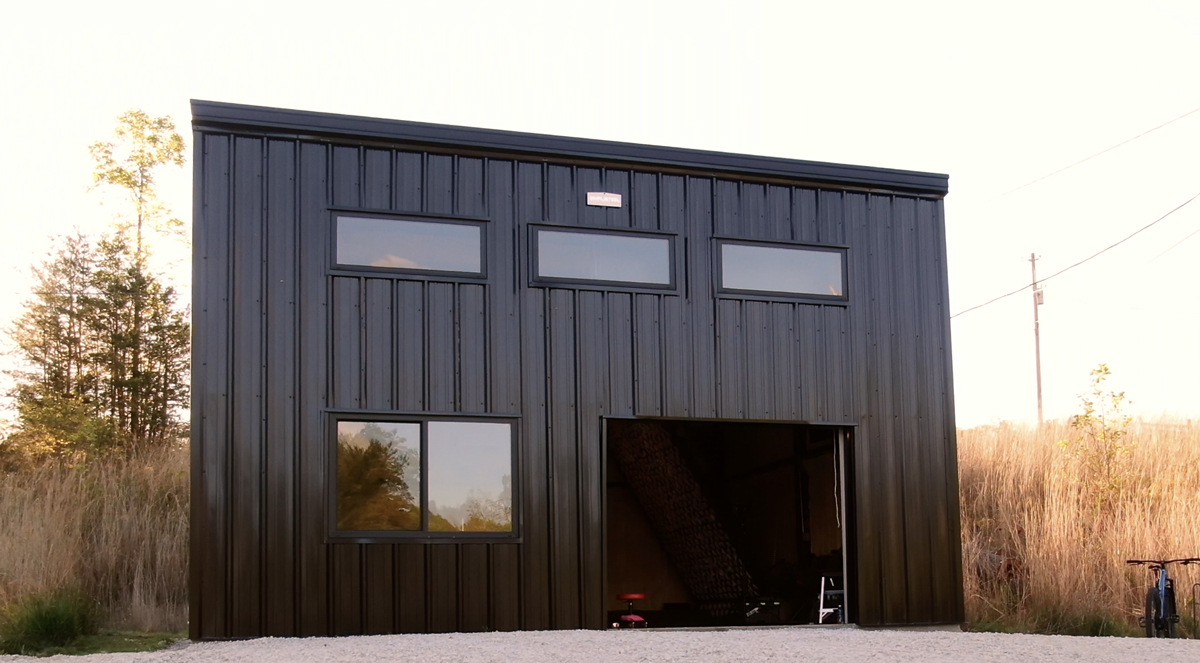
Pavlinovic and Bormann selected a liftstrap bifold door from Schweiss Doors. The door measures 55 feet wide by 21 feet tall, clad in dark gray metal siding with seven windows. The door features the Schweiss automatic strap latch system and an emergency backup hand crank. The metal crank can be attached to the top of the electric door motor, which allows the door to be manually opened or closed if there is a power outage. A disconnect device prevents the motor from operating when the hand crank is being used.
Another benefit of the bifold door is the way it opens, lifting straight up and folding in half, instead of swinging out to the front of the building when it opens. This allows for more space in front of the hangar where vehicles and planes can be parked safely, even if the hangar door starts to open.
“You don’t need this huge space in front of the bifold door,” Pavlinovic said. “You’re not accidentally lifting cars or especially planes. That would be bad.”
The Best of Both Worlds
With the structure complete, the Pavlinovic family can enjoy their airpark hangar home — the best of both worlds — a peaceful retreat in a beautiful setting literally just steps from their aircraft and home airport. That’s any pilot’s dream come true. MB