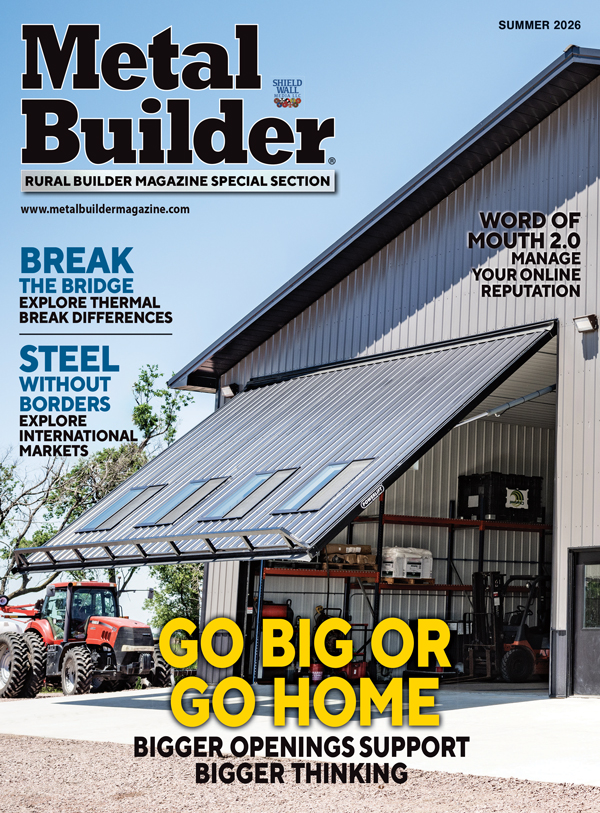
Originally published as: Go Big or Go Home: Specifying and Installing Large Doors on Metal Frames
When your client needs a door that makes a statement—and holds up to hard daily use—the details of door type, framing, and hardware selection make all the difference.
There is something undeniably satisfying about a well-engineered big door. Whether it is swinging open on a 60-foot aircraft hangar, rolling back on a cavernous equipment storage bay, or lifting hydraulically on a showstopping barndominium garage, a large door on a metal frame building is one of those elements that customers notice, use every day, and remember when it works—and never forget when it does not.
For metal frame builders, the door conversation is increasingly complex. Clients want larger openings, more customization, smarter operation, and better weather performance than ever before. At the same time, a metal frame building imposes real structural demands that a wooden post-frame does not, and builders who treat a large door specification as an afterthought often find themselves troubleshooting expensive problems after the building is complete.
Why Metal Frame Demands a Closer Look
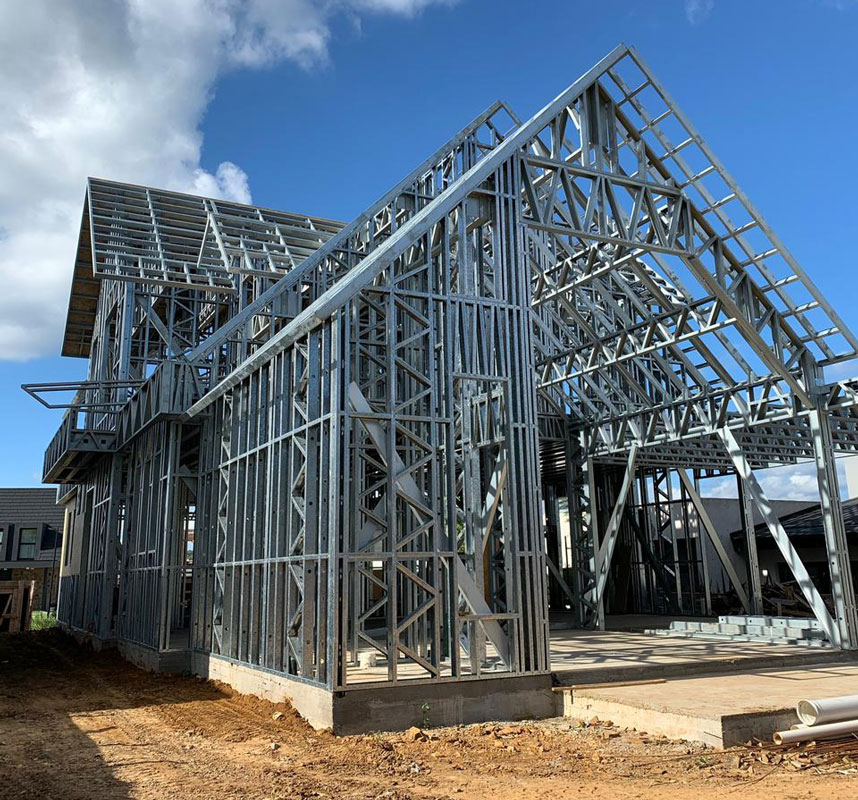
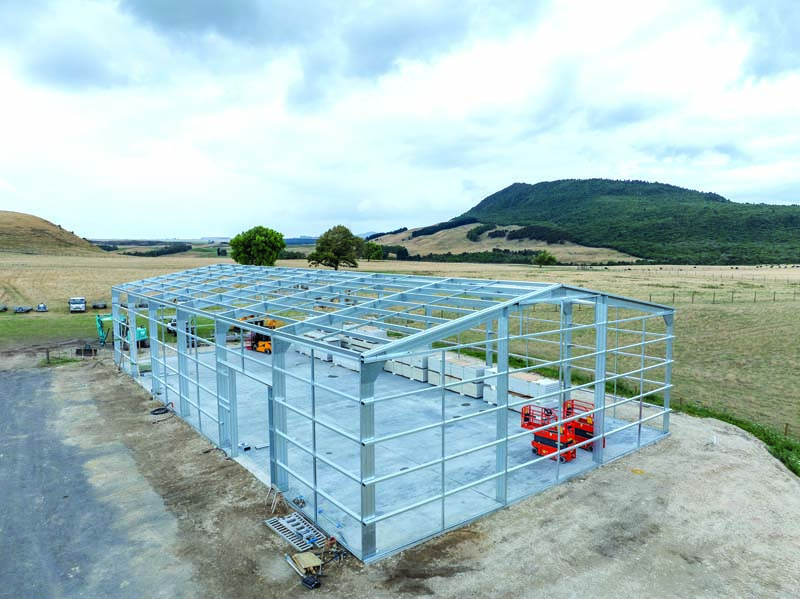
Metal frame buildings, whether light-gauge cold-formed or structural red iron, behave differently than post-frame when it comes to large openings. Headers must be engineered, not estimated. The cardinal rule: determine your largest door opening before you order the building. Lock the opening size early so the structure and door work together.
Framing for large doors in metal buildings typically begins with a structural header that transfers the loads imposed by door dead weight and wind pressure down to the foundation. On sidewall openings, the main frame handles most of this. For endwall openings, pay close attention to column spacing and bracing during the design phase, not during installation. Once the frame is set, the door system choice becomes the next major decision.
“PowerLift imposes lower building loads than most doors, delivering style and function with zero maintenance. We build the industry’s only single-unit door, with an all-welded frame—doing away with bolts and screws that fatigue and loosen over time.”
— PowerLift Hydraulic Doors
Choosing Your System: A Door Type Breakdown
Not all large doors are created equal, and each system type offers distinct trade-offs in cost, headroom, weather seal, speed, and structural demands. Here is a practical look at the most common options:
Sliding Doors
The sliding door remains the workhorse of agricultural and light commercial metal buildings. It is the most cost-effective system for large openings, requires no headroom above the opening, and is straightforward to install and adjust. The primary limitation is weather sealing—a sliding door cannot seal as tightly as an overhead or hydraulic system against wind-driven rain and snow. Sliding doors also require clear wall space on at least one side of the opening to park the panel.
Track and hardware quality are critical. Heavy-gauge commercial track, solid trolley hangers, and properly tensioned bottom guides make the difference between a door that glides for decades and one that derails and binds within a few seasons. Builders who spec economy hardware on heavy doors tend to get callbacks.
Bifold Doors
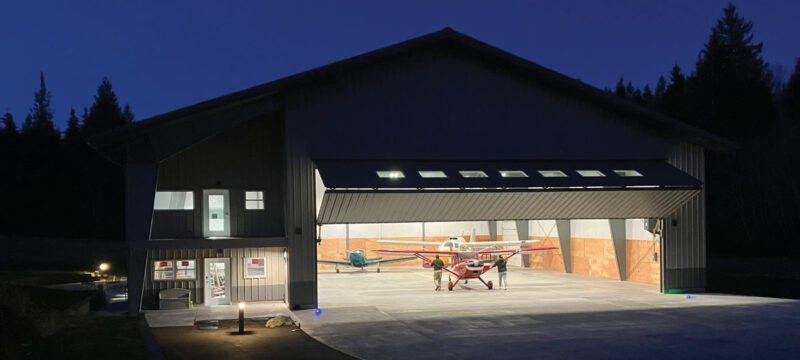
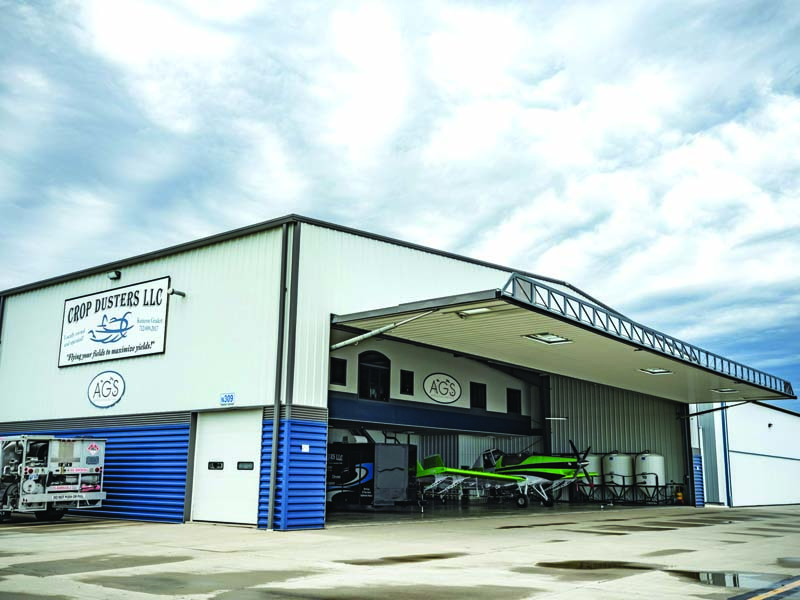
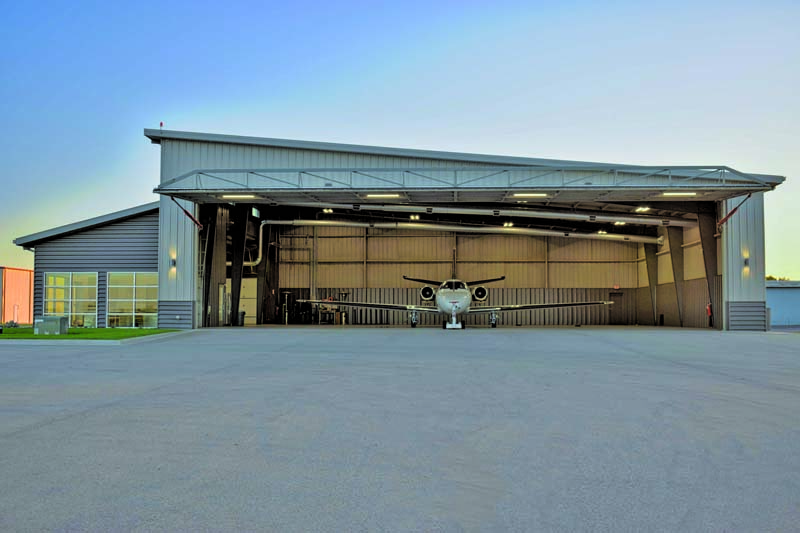
Bifold doors are a staple in aviation hangar applications and increasingly popular in large agricultural buildings. They fold outward at the midpoint, providing a full, clear opening without the headroom requirements of an overhead roll-up. The upper leaf tilts up while the lower leaf swings down, creating a built-in canopy effect. Bifold systems require a solid header because the door transfers significant load through the hinge track at the top. Proper leveling during installation is essential—a bifold door on an out-of-plumb frame will never seal or operate correctly.
Hydraulic Swing-Up Doors
Hydraulic single-panel doors have made significant inroads in both agricultural and architectural markets. These single-unit doors pivot outward and upward from the bottom, driven by hydraulic cylinders at the sides of the frame. When open, the panel extends as a large overhead canopy—a feature many clients actively want for covered outdoor work. Doors exceeding 100 feet in width are available, and most open fully in 30 seconds or less, which matters enormously in high-cycle applications like flight schools and commercial vehicle storage.
In steel-framed buildings, hydraulic doors are typically welded to the building frame—providing a rigid, permanent connection that must be engineered to withstand the weight and dynamic loads of a large single panel. Backup power options, including tractor hydraulics and battery systems, provide redundancy during power outages. From there, the next concern is how the opening itself is framed to carry those loads.
“Our doors are constructed with aluminum frames that are light in weight yet incredibly sturdy. This unique combination ensures easy operation without compromising on durability. The aluminum construction also offers excellent resistance to corrosion, making our doors ideal for various environmental conditions. Wind ratings of 115 mph plus provide reliable protection against harsh weather conditions.”
— I-Beam Sliding Doors
Framing the Opening: What Builders Need to Know
Regardless of the door type, the structural framing around a large opening in a metal building must be carefully designed and executed. Here are the key issues builders encounter most often:
Header Sizing and Load Path
The header above a large door carries wind load, dead load from cladding above the opening, and any reaction loads from door hardware or hinge points. A common mistake is designing the frame for a 20-foot opening and then specifying a 24-foot door after the fact. Get the door size committed early and let it drive the engineering, not the other way around. That makes the jambs and sill conditions the next pieces to confirm.
Jamb Posts and Sill Conditions
Jamb posts—the vertical framing members on either side of the opening—must carry header reaction loads down to the foundation through proper connections at both top and bottom. Undersized jamb posts are a frequent source of alignment and seal problems as buildings rack under wind loads.
For sliding doors, the bottom guide system requires a clean, flat, and durable floor surface at the sill. In agricultural settings where skid steers and tractors constantly pass through, a poorly detailed slab at the threshold is a chronic maintenance problem. Consider a thickened slab edge or recessed concrete channel at the sill to protect the bottom guide from equipment impact. After that, hardware and weather detailing determine how well the door performs over time.
“MWI Components values solutions that make building on the job-site easier. Since acquiring the slide door track and hardware division from Lawrence Hardware, we have been able to offer a complete selection of American-made round and square track, hardware essentials, and slide frame—giving builders a single source for the components that keep large doors working year after year.”
— MWI Components
Hardware, Weather Performance, and Customization
A large door is only as good as its hardware and weather detailing. For sliding doors, trolley capacity must match panel weight with a meaningful safety margin. Undersized trolleys fail prematurely, especially on doors exposed to fine-grain dust and debris. Heavy-duty trolleys with sealed bearings outperform standard agricultural hardware in most applications and are worth the upcharge on any door that sees daily use.
Track and Trolley Systems
For sliding doors, track gauge and trolley capacity must match the door panel weight with a meaningful safety margin. Undersized trolleys fail prematurely, especially on doors that see heavy use or are exposed to fine-grain dust and debris. Heavy-duty commercial-grade trolleys with sealed bearings outperform standard agricultural hardware in most applications and are worth the upcharge on any door that will see daily use.
In terms of weather sealing, hydraulic swing-up doors—especially those sealing against the exterior building face—outperform sliding systems for air infiltration. For climate-controlled environments or severe weather regions, hydraulic or overhead systems are the stronger specification. Overhead roll-up doors fall in the middle ground, with performance that can be substantially improved with bottom seals, compression side seals, and header weatherstripping. Once weather performance is addressed, insulation and accessories become the final customization layer.
Insulation is no longer a specialty item on large doors. Hydraulic single-panel doors can be filled with fiberglass batt or spray foam and clad on both faces with glass, sheet metal, stucco, or wood—making them increasingly popular in residential and commercial architectural applications. Walk doors, windows, and small porch structures are all routinely incorporated into large door panels. Remote control and smartphone app integration are now standard client expectations on any high-use or commercial installation.
Insulation Options
Large insulated doors are no longer a specialty item. Hydraulic single-panel doors can be filled with fiberglass batt or spray foam insulation and clad on both sides with virtually any material that attaches to steel, including glass, sheet metal, stucco, and wood. This makes them increasingly popular in residential and commercial architectural applications where a large door is also a visual statement about the building.
For sliding doors, insulated panels are available, but they add cost and weight. Builders should confirm that the track and hardware system is rated for the added weight of insulated panels before specifying them. An insulated panel that is even marginally heavier than the rated trolley capacity will cause premature hardware failure.
Customization and Architectural Applications
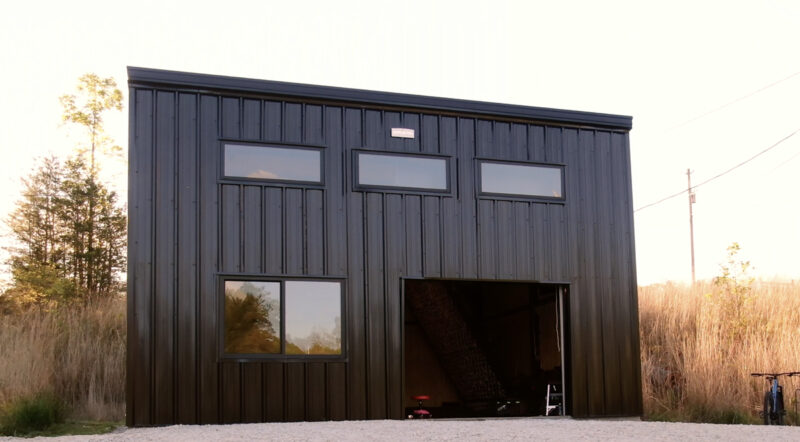
One of the biggest shifts in the large-door market over the past decade has been the expansion from purely utilitarian applications into architectural and residential applications. Hydraulic doors with full glass cladding are now appearing in upscale barndominiums, brewery taprooms, commercial restaurants, and high-end equestrian facilities. The ability to specify virtually any cladding material for a steel-framed hydraulic door has opened a new market for builders willing to position themselves as design-build specialists, not just structural contractors.
Walk doors, windows, and even small porch structures are all routinely incorporated into large hydraulic and sliding door panels. A 30-foot hydraulic door and a walk door with a vision lite allow the operator to check for obstructions before raising the full panel—a practical safety feature that also adds to the architectural interest of the facade.
Remote control operation—including smartphone app integration for hydraulic door systems—is now a standard feature expectation rather than a luxury option. Clients managing large agricultural or commercial facilities expect to operate multiple doors from a single device. Specifying systems that include robust remote control capabilities is increasingly a baseline requirement in competitive bids.
Common Mistakes and How to Avoid Them
After talking with builders and suppliers across the industry, a few recurring mistakes show up again and again on large door projects in metal buildings:
• Sizing the building before finalizing the door. The structural and financial cost of retrofitting a larger opening after the fact is always higher than designing it right from the start. Lock down door sizes before you order the building package.
• Underspecifying hardware. Track, trolleys, and bottom guides are not the place to save money on a high-use commercial or agricultural door. Undersized hardware fails early and often, and the labor cost to retrofit is far greater than the original upcharge for quality components.
• Ignoring headroom constraints. Overhead roll-up doors can require 12 to 14 inches of headroom above the door opening, which affects both the rough opening height and the interior clearance for tall equipment. Verify headroom requirements for every door type before finalizing building height.
• Failing to account for backup power. Any large door, whether hydraulically or electrically operated, in a working agricultural or industrial facility needs a backup power plan. Power outages happen, and a door stuck open or closed during one is a significant operational problem. Specify and install backup power capability during initial installation.
• Neglecting threshold conditions. The floor around the door opening is subject to more concentrated wear than virtually any other part of the building. Design the slab for what will actually be happening there, not for a generic floor condition.
Making the Right Call for Your Client
There is no single right answer when it comes to specifying a large door for a metal-frame building. The best choice depends on the use case, the building’s structural system, the climate, the budget, and—increasingly—the client’s aesthetic vision. What has not changed is that the decisions made at the specification stage have a long tail. A well-specified, properly framed, and correctly installed large door is something a client will appreciate for the life of the building. One that is undersized, poorly framed, or equipped with marginal hardware is a source of callbacks and reputation risk for the builder.
Take the time to get the opening engineered correctly, select systems and hardware rated for the actual load and use conditions, and work with suppliers who understand the specific demands of metal frame construction. The clients who need big doors are counting on builders who know how to deliver them.
Resources
• Metal Building Manufacturers Association (MBMA) | mbma.com
• National Frame Building Association (NFBA) | nfba.org
• Steel Door Institute (SDI) | steeldoor.org
• American Institute of Steel Construction (AISC) | aisc.org
• AAMA (American Architectural Manufacturers Association) | amanet.org