
Originally Published as: Steel Without Borders: How Metal Building Is Going Global
The construction industry is experiencing a global transformation. Metal building technology, once shaped by local codes, climate, labor, and supply chains, is now expanding beyond North America. This technology is rapidly gaining traction in Europe, Asia-Pacific, the Middle East, and other regions, creating significant global growth opportunities for North American companies.
The global metal building systems market reached $67.8 billion in 2024 and is projected to grow to $124.8 billion by 2033, reflecting a 6.9% annual growth rate. Prefabrication, sustainability requirements, urban housing shortages, and skilled labor scarcity are driving global adoption of solutions that have long been used in North America.
A Market With Deep Roots Outside the U.S.
American builders should recognize that light-gauge steel (LGS) framing is well established internationally. In Europe and Australasia, cold-formed steel systems for wall panels, floor joists, and roof trusses have been standard for decades, whereas in North America, it is still catching up.
Framing systems that include trusses, floor joists, and wall systems using LGS have their deepest roots in Europe. Overseas companies are actively courting the entire framing package market for trusses, floor joists, and wall and roof panels in the United States, reversing the historical direction of technology transfer.
The international market is not waiting for American expertise. In metal building technology, particularly light-gauge steel fabrication and offsite panelization, other regions have led innovation. North American builders entering global markets should do so with both curiosity and confidence.
Ireland: A Case Study in Rapid Adoption
Ireland demonstrates rapid international growth in metal building construction. With a severe housing shortage and construction rates at half the required level, the country needs faster, more efficient building methods. Light-gauge steel framing has emerged as a leading solution.
Howick Ltd., a New Zealand-based manufacturer of precision roll-forming equipment, has identified Ireland as one of its fastest-growing markets, with its machines operating in more than 80 countries. The company points to the country’s housing crisis as a structural driver of demand rather than a cyclical one.
Remagin Ireland, formerly Horizon Offsite, illustrates the market’s evolution. Founded in 2017 to address off-site construction needs, the company initially exported up to 90% of its prefabricated components to the UK. As Ireland’s housing crisis intensified, domestic demand exceeded exports. By operating four Howick machines, Remagin became a national leader in off-site construction within eight years.
“The machines are part of our business. Critical to our business. We don’t have a business without the Howick,” Remagin Ireland Country Manager Ger Fahey said of the roll-forming equipment at the center of the company’s operations.
Ireland’s experience offers valuable insights for North American builders monitoring global markets. Housing shortages also impact the UK, continental Europe, Australia, and Asia-Pacific. Urgent demand, labor shortages, and acceptance of prefabricated metal are driving growth in these regions.
The Labor Equation
Skilled labor shortages are the primary driver of international adoption of metal buildings, a challenge familiar to American contractors. Smaller labor pools, rising wages, and increased risks make traditional methods less viable worldwide.
Tom Reed, Howick’s sales representative at the company’s Pittsburgh office, has spoken directly to how this calculus is changing, even in the traditionally wood-centric U.S. market. “It’s very easy to snap together… “ It’s really about speed,” Reed noted in comments cited in Rollforming Magazine. He also pointed out that the cost gap between light-gauge steel and wood framing has closed substantially when labor savings are factored in.
In regions where LGS is advanced, labor efficiency is a compelling argument. For example, a Basque villa in Spain, framed with Howick technology and LGS, was built in 10 days by two people. Projects that once required larger teams and more time are now accelerating LGS adoption in southern Europe and beyond.
Asia-Pacific: The Largest Growth Engine
Asia-Pacific is the largest growth engine for metal buildings, leading global demand with a $28.9 billion market in 2024 and projected annual growth of 7.5% through 2033.
China and India are the main drivers, fueled by urbanization, government infrastructure programs, and expanding manufacturing and logistics sectors. The Asia Metal Building Design and Industry Expo, scheduled for Shanghai in August 2026, highlights the region’s commitment to the sector. Growth also extends to Southeast Asian nations such as Vietnam, Indonesia, and the Philippines, which are investing in modern construction infrastructure that favors prefabricated metal systems.
For North American builders and suppliers, Asia-Pacific presents both opportunities and challenges. Chinese and Japanese manufacturers dominate, and local content requirements can create entry barriers. Companies entering through equipment, technology partnerships, or licensing achieve greater success than those exporting finished products at scale.
Europe: Regulation as a Growth Driver
Europe’s metal building market, valued at $12.7 billion in 2024, is influenced by regulation as much as by demand. The EU’s Green Deal and Construction Products Regulation encourage the use of sustainable materials. Steel, which is fully recyclable and can be produced using low-carbon methods, aligns with these requirements.
Germany, the UK, and France lead market development in Europe, each with distinct construction practices. The UK’s National Health Service modernization, which involves building new healthcare facilities, is a key driver for advanced systems such as LGS and modular metal construction.
FRAMECAD, a New Zealand-based roll-forming equipment manufacturer with decades of international experience, reports that steel framing is rapidly being adopted across Europe as a proven alternative to traditional methods. The company serves hundreds of clients worldwide with its design-to-manufacturing system and recently launched Steel Framing Connections, a podcast documenting global cold-formed steel applications, reflecting the sector’s demand for shared knowledge.
The Middle East and Latin America: Emerging Demand
Beyond Europe and Asia-Pacific, the Middle East is attracting attention in the metal building sector. Infrastructure investments and economic diversification in Gulf Cooperation Council nations make pre-engineered metal buildings appealing. Hot, arid climates and tight project timelines further increase their attractiveness for developers and agencies.
Latin America is in the early stages of adopting metal buildings, but interest is increasing. Companies such as USG LATAM are working to modernize construction practices across the region. Urbanization, limited skilled labor, and new roll-forming technology are expected to drive growth over the next decade.
What North American Builders Should Know
For builders and manufacturers in the United States and Canada, the key message is that international markets are evolving in ways that will increasingly intersect with the North American industry, whether or not companies choose to participate.
International equipment suppliers are already active in the U.S. Howick and FRAMECAD, both based in New Zealand, maintain U.S. offices and are building domestic customer bases. Scottsdale Construction Systems, based in Australia, is another overseas company in the North American LGS market. These companies bring extensive experience from markets where steel framing is standard and are now sharing that expertise in the U.S.
For builders considering international opportunities, the barriers are real but manageable. Building codes vary widely by country and region. Material sourcing relationships must often be established from the ground up. Currency risk and longer project timelines require financial discipline. However, companies that have overcome these challenges, including many clients in the global LGS and metal building sector, describe international markets as transformative for their businesses.
Ireland’s Remagin provides a model: the company developed deep expertise in a single technology, invested in reliable equipment, and built a reputation for full-service delivery, setting it apart from competitors offering only components. This approach led directly to rapid national market leadership.
The global housing and infrastructure challenge will persist. The United Nations projects that 2.5 billion more people will move to cities by 2050, most of them in Africa and Asia. Traditional construction methods cannot meet this demand. Metal building systems, which are precision-engineered, factory-produced, and rapidly assembled, offer a viable solution. The question for North American companies is whether they will help shape this narrative.
Source & Resources
- Howick Ltd. howickltd.com
- FRAMECAD framecad.com Steel Framing Connections podcast available through BuildSteel.org
- Remagin Ireland formerly Horizon Offsite; part of the Etex Group remagin.world/en/
- Scottsdale Construction Systems scs.com.au
Industry Organizations
- Steel Framing Industry Association (SFIA) — sfia.memberclicks.net
- BuildSteel.org — buildsteel.org
- Metal Building Manufacturers Association (MBMA) — mbma.com
Marketing Research
- Growth Market Reports: Global Metal Building System Market (2024–2033, CAGR 6.9%, $67.8B to $124.8B)
- Data Bridge Market Research: Global Light Gauge Steel Framing Market ($37.45B in 2022, projected $56.18B by 2030)
- Valuates Reports: Global Light Steel Framing (LSF) Market ($23.57B in 2024, projected $43.66B by 2031)
- PS Market Research: Global Structural Metal Products Market ($510.3B in 2024, projected $764B by 2030)
International Trade Shows
- Asia Metal Building Design and Industry Expo (MBE 2026) — Shanghai, August 2026
- Batimat — Paris, France September 2026
- Offsite Expo — United Kingdom September 2026
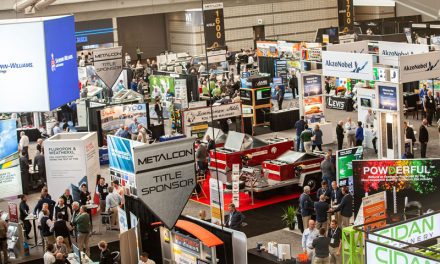
- METALCON — USA October 2026