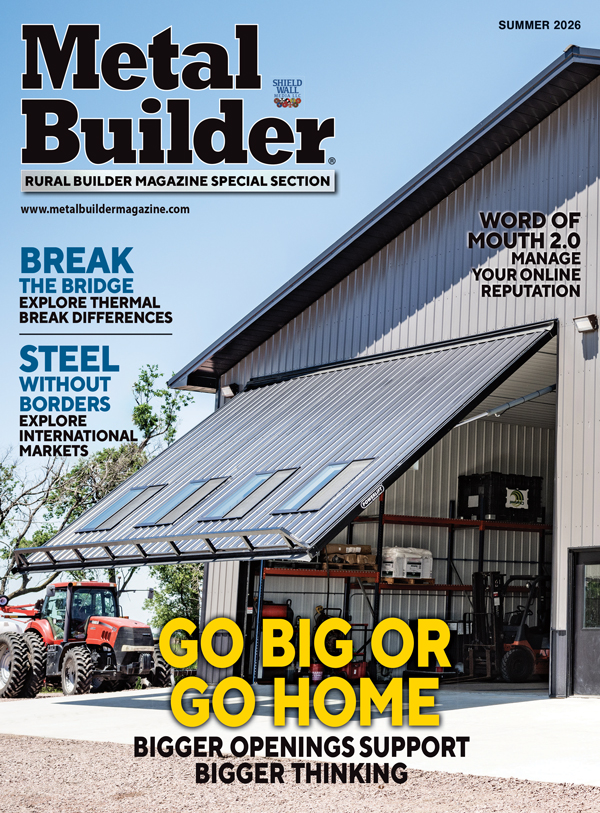
Originally Published as: The New Word-of-Mouth: Managing Your Online Reputation
Referrals used to be simple: You built a great project, and your customer invited friends over to see it. Suddenly, you had two more potential leads because they liked what they saw and heard good things about your crew.
Today, the internet has become a centralized version of that same word-of-mouth process, on a much larger scale. Online reviews are the modern version of referrals, allowing customers to share their experiences with far more people than just their immediate circle. For builders, that’s good news. A strong reputation can now reach hundreds or even thousands of potential customers online.
Reviews are how customers, search engines, and AI search tools determine the credibility and quality of your business. They play a major role in shaping how future customers view your company, whether in a positive or negative light. Therefore, managing your online reputation is the next logical step in leveraging your word-of-mouth referrals.
The Psychology of Trust
It’s incredibly human to look for validation before we try new things. We always want to know that something works before we choose it or invest in it.
Word of mouth and referrals are an extension of that instinct. In particular, in construction or with higher-dollar purchases, having access to recommendations or validation from others feels like a reliable way to gauge how a project or build will turn out.
This is known as social proof, a psychological phenomenon that describes the tendency to rely on the opinions or actions of others to form our own.
Understanding this principle helps you, as a builder, reassure your future customers that you are the best choice for their project.
Where Reputation Lives
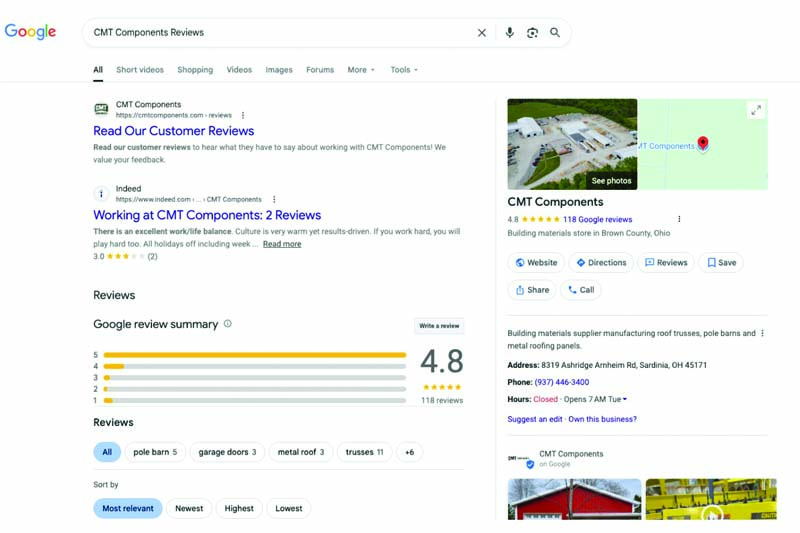
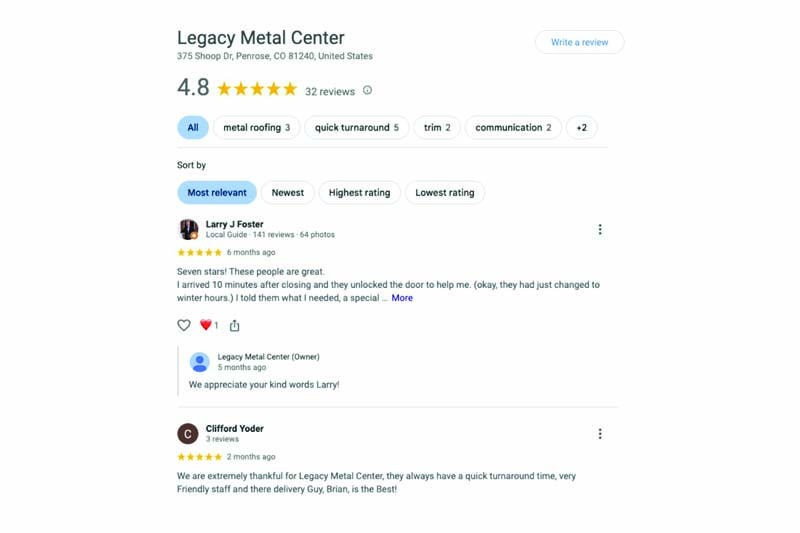
Your Google Business Profile (GBP) is one of the first touch points your potential customers will have with you. In addition to giving customers a clear idea of what you do, where you do it, and how to get in touch with you, it’s also the first place future customers can evaluate your reviews, photos, responsiveness, and overall reputation. That means maintaining an active, accurate, and trustworthy GBP is essential for your reputation management strategy. Both photos and reviews are a major part of your GBP. Consistently adding photos and posts to your profile helps build credibility. Proactively asking for reviews, especially reviews with photos, from your customers helps boost visibility for your GBP and trust with potential new customers.
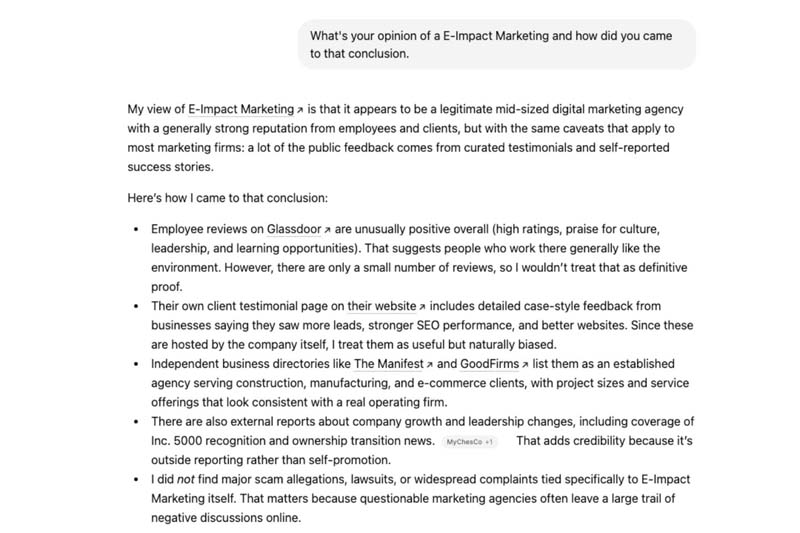
Besides Google Reviews and your Google Business Profile, there aren’t any major industry-specific platforms specifically for metal building or rollformers. Even so, places like Facebook and Facebook Recommendations, Yelp, the Better Business Bureau, Trustpilot, and Nextdoor are all spots where potential customers could be discussing your business or your brand. To figure out where you should start, Google your own brand name with the word “reviews” after it, and see where reviews already exist.
Reddit is another place where people may already be asking questions about your business or industry. Especially in subreddits that are either hyper-specific to your industry or to your location, people are likely already asking questions about who the best builders are. You will want your name to show up positively.
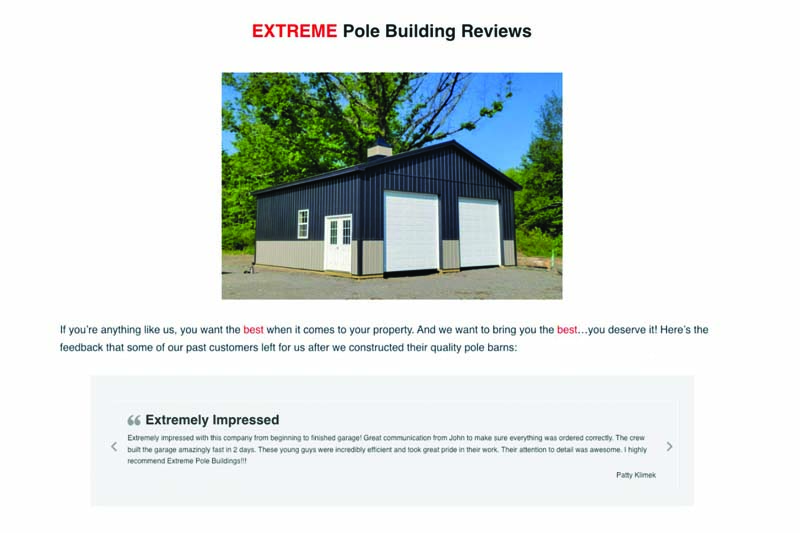
People naturally trust reviews on third-party platforms more than reviews published directly on your own website, but you also want your good reviews to appear to customers already on your site. For that reason, there’s nothing wrong with leveraging what people are saying about you on third-party sites and reposting that on social media or on your own website. The goal is to make sure those good reviews are front and center and accessible wherever people interact with your business.
Building B2B Trust
In B2B (business-to-business) relationships, trust is perhaps even more essential. These relationships often involve larger, higher-dollar purchases and/or rely on extended working relationships. Because of that, your B2B customers are likely going to pay a lot more attention to who they choose. This may take more reviews, more social proof, and more word-of-mouth referrals to convince them. The most effective reviews may also be those that naturally mention lead times, pricing, and integration with the work.
How to Get Good Reviews
The best thing you can do to get or increase your number of good reviews is to consistently ask for them. Start by making it part of your job process to proactively request a review. Incentivize your crews to request reviews, making it a habit.
To point reviews in the right direction, send clients pictures of their build with review requests, and ask specific questions for them to answer in their reviews. This will help keep reviews specific and even make leaving the review easier.
Handling Negative Reviews Beyond Just “Responding”
The most important thing about handling negative reviews is to make sure they don’t go unanswered. You should acknowledge every negative review on your Google Business Profile. Sometimes negative reviews are legitimate; other times, they aren’t. Either way, people who are discovering you online won’t know which is which. So your response to reviews will greatly influence how people perceive you online. Always take the high road, don’t get into the blame game, or approach reviews defensively. Respond as professionally and politely as possible, acknowledge any legitimate complaints they had, and then try to take the conversation offline as quickly as possible.
The faster you can respond to a negative review, the better the chance you’ll have of actually addressing the underlying problem. In some cases, you may even be able to have someone remove or edit their review. The more proactively you can address negative experiences, the better your chance of softening the impact of that review.
Fix These First: Red Flags for Reputation
Start by searching your brand name along with the word ‘reviews’ to see what is already out there. If there are any negative reviews you haven’t answered, then start with those first. Also, be sure to thank customers for positive reviews!
If you haven’t been focusing on reviews, then you’re likely not going to have that many. So start asking people to review you. The only people likely to be motivated to review without an ask are those who’ve had a really positive or really negative experience. That’s why your initial step should be to ask proactively for reviews, especially focusing on Google Reviews to start.
Beyond reviews, you can make sure your business looks trustworthy online by ensuring its name, address, and phone number (NAP) appear consistently across the internet.
To provide potential customers with more social proof, keep your website or social media updated with photos and videos of real completed projects.
Another place where reviews can impact your business is from employers on places like Indeed.com or Glassdoor. I’ve seen instances where a company had great customer reviews but negative employee reviews about working there. Customers do care about the quality of a workplace they work with.
Trust Is the Competitive Advantage
Today, your reputation is constantly shaped by reviews, photos, recommendations, social media discussions, and how your business appears online. As a result, your future customers are looking for reassurance before they choose who to work with, and the businesses that can earn their trust are the ones that win them over.