
Originally Published as: How Long Does It Take to Erect a Metal Building? Timelines, Field Realities, and Builder Insights
Metal buildings are increasingly popular in agricultural, commercial, light industrial, and self-storage markets—and for good reason: predictability. With factory engineering, pre-cut components, and bolted connections, metal structures minimize the uncertainties that often disrupt traditional construction timelines. Generally, metal buildings can be erected 33% faster than traditional construction.
However, many owners still ask, “How long will the erection actually take?” The answer varies based on preparation, complexity, and crew efficiency. Once foundations are set and materials are staged, most pre-engineered metal building systems can be erected in days or weeks, not months.

Typical Erection Timeline
While project scopes differ, field experience shows the following general timelines:
- Small garages/agricultural sheds: 3–7 days
- Mid-size workshops/warehouses (5,000–15,000 sq. ft.):
- 1–3 weeks
- Large commercial or industrial structures: 3–6+ weeks (including interior buildout)
- Self-storage rows (single-story): 10–14 days per building under ideal conditions
- These estimates assume:
- Foundations are complete and cured
- Anchor bolts are set correctly
- Materials are delivered and inventoried
- Crane access and staging areas are ready
If any of these variables falter, the timeline may slip.
Builder Tips: Keeping Erection on Schedule
- Anchor Bolt Accuracy Is Key – Misaligned anchor bolts can stop progress. Always verify the bolt layout against final stamped drawings before steel delivery.
- Stage Steel in Lift Order – Organize bundles by erection sequence, placing primary frames closest to crane access. Lost time from reshuffling can add up quickly.
- Monitor Weather Forecasts – Wind is a significant risk factor during frame lifts. Plan primary frame erection during predictable weather windows.
- Conduct a Pre-Erection Meeting – Gather crew leads, crane operators, and the site superintendent before steel arrives. Review:
- Lift plan
- Safety protocols
- Panel installation sequence
- Fall protection systems
- Inventory Materials Immediately Upon Delivery – Discovering shortages mid-erection can lead to expensive downtime. Confirm counts on delivery day.
Field Checklist: Pre-Erection Readiness
Site & Foundation
- Slab or piers cured to specified strength
- Anchor bolts verified for spacing, elevation, and projection
- Site graded and accessible for crane and delivery trucks
- Underground utilities located and marked
Materials
- Bill of materials cross-checked
- Primary frames identified and staged
- Secondary framing sorted
- Fasteners and hardware stored dry
Equipment
- Crane capacity confirmed for the heaviest lift
- Aerial lifts inspected
- Impact wrenches calibrated
- Safety harnesses and tie-offs available
Crew
- Erection drawings reviewed
- Safety briefing completed
- Roles assigned (bolt-up, alignment, panel crew)
What Slows Metal Building Erection?
- Even the most meticulously engineered buildings can face delays due to:
- Incorrect foundation dimensions
- Late material deliveries
- Wind conditions exceeding safe lift limits
- Crew inexperience with the specific system
- Poor coordination between trades
The good news? Most delays can be avoided with thorough upfront planning.
The Bottom Line
Across various manufacturers and systems, a consistent pattern emerges: once foundations are ready and materials are on-site, metal buildings can be erected quickly. This speed translates to reduced labor exposure, faster occupancy, and quicker returns on investment—key advantages of steel in the construction marketplace.
Resources: Company-Specific Erection Considerations
Chief Buildings Chief systems are fully engineered pre-engineered metal buildings (PEMBs) that cater to a range of projects from agricultural facilities to community and industrial buildings. With pre-punched and fabricated components, erection crews can typically complete primary and secondary framing in 1-2 weeks for standard structures, with roofing and wall panels following closely behind.
Field Advantage: Engineered systems minimize onsite cutting or modifications—one of the biggest time drains in conventional framing.
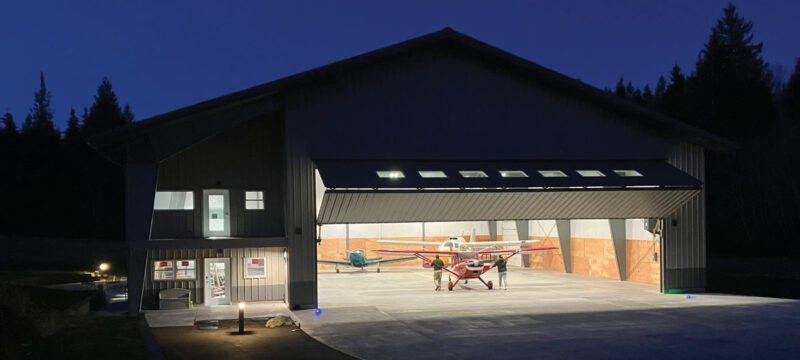
American Building Network / American Buildings Dealers supply American Buildings’ engineered systems nationwide, often for customized commercial or aviation projects. Given larger clear spans and higher eave heights, crane coordination is crucial. Under optimal conditions, structural steel erection can be completed in 7–14 days, while more complex buildings may extend the timeline to 3–4 weeks.
Field Advantage: Advanced engineering reduces rework and improves alignment tolerances, ensuring efficient bolt-up.
Trac-Rite (Trachte) Trac-Rite specializes in self-storage construction, where repetition enhances speed. Single-story storage rows can be erected in 10–14 days under ideal conditions, while multi-story facilities require additional coordination.
Field Advantage: Standardized components and repetitive tasks shorten crews’ learning curves.